Letters to Theo: Understanding Van Gogh Through His Correspondence
The correspondence between Vincent van Gogh and his younger brother Theodorus, known as Theo, represents one of the most intimate and revealing collections of letters in art history. Spanning from 1872 until just days before Vincent's death in 1890, these letters provide an unprecedented window into the mind of a genius, documenting not only his artistic evolution but also his profound struggles, philosophical musings, and unwavering dedication to his craft.
More than 650 letters from Vincent to Theo have survived, forming a narrative that is simultaneously a technical manual, a philosophical treatise, and a deeply personal diary. Through these pages, we encounter Van Gogh not as the mythologized tortured artist of popular imagination, but as a thoughtful, articulate individual grappling with questions of meaning, beauty, and human connection.
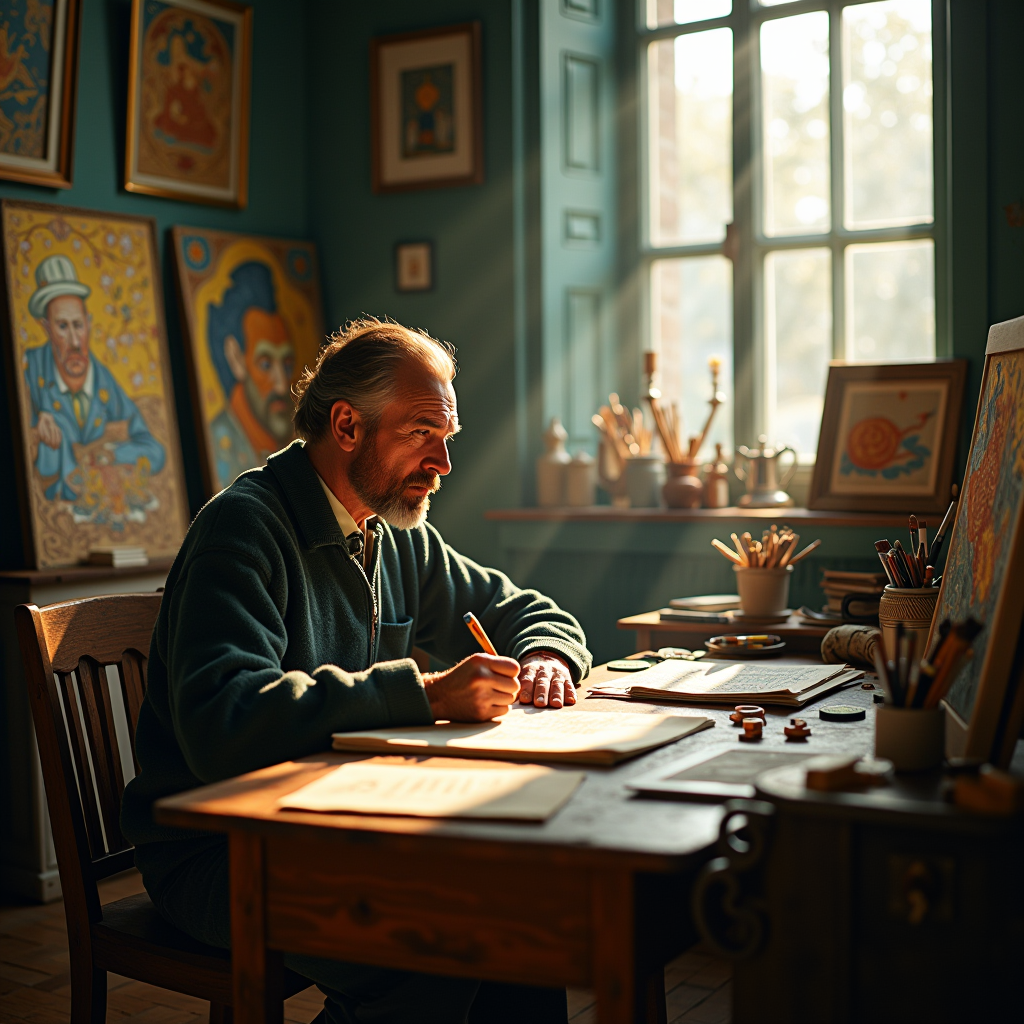
The Foundation of a Unique Relationship
The bond between Vincent and Theo van Gogh transcended typical sibling relationships. Theo, four years younger than Vincent, became not only his brother's primary financial supporter but also his most trusted confidant, art dealer, and emotional anchor. Their correspondence reveals a relationship built on mutual respect, shared artistic sensibilities, and an almost telepathic understanding of each other's inner worlds.
Vincent's letters to Theo were written with remarkable frequency and depth. During particularly productive or turbulent periods, he would write multiple times per week, sometimes producing letters that ran to several thousand words. These weren't casual updates but carefully composed reflections that demonstrated Vincent's literary talent alongside his visual artistry. He wrote in Dutch, French, and occasionally English, adapting his language to his thoughts and circumstances.
"I feel that there is nothing more truly artistic than to love people." - Vincent van Gogh to Theo, July 1880
The financial dimension of their relationship cannot be overlooked. Theo, working as an art dealer in Paris, sent Vincent a monthly allowance that enabled him to purchase materials and sustain himself. In return, Vincent sent Theo his paintings, viewing this arrangement not as charity but as a business partnership. This exchange gave Vincent dignity and purpose, allowing him to see himself as a working artist rather than a dependent.
Yet the letters reveal that money was often a source of anxiety and guilt for Vincent. He frequently apologized for his financial dependence, promised to work harder, and expressed hope that his paintings would eventually sell. These passages are poignant reminders of the economic precariousness that shadowed his entire artistic career, a reality that makes his prolific output all the more remarkable.
Technical Insights and Artistic Philosophy
For art historians and enthusiasts, the letters serve as an invaluable technical manual. Vincent wrote extensively about his methods, materials, and artistic decisions. He discussed color theory with the precision of a scientist, explaining his experiments with complementary colors and his attempts to capture the effects of light. His descriptions of specific paintings often accompanied the works themselves, providing context that illuminates his intentions.
In a letter from Arles in 1888, Vincent described his approach to painting sunflowers: "I am working at it every morning from sunrise on, for the flowers fade so quickly. I am now on the fourth picture of sunflowers. This fourth one is a bunch of 14 flowers... it gives a singular effect." This passage not only documents the creation of one of his most famous series but also reveals his working method—painting quickly to capture fleeting natural phenomena, working in series to explore variations on a theme.
Vincent's letters demonstrate his deep engagement with art history and contemporary movements. He referenced artists ranging from Rembrandt and Delacroix to his contemporaries like Gauguin and Bernard. He analyzed their techniques, debated their merits, and positioned his own work within broader artistic conversations. These discussions reveal a sophisticated understanding of art that contradicts the notion of Van Gogh as an untutored primitive.
His philosophical reflections on art's purpose are equally compelling. Vincent believed art should serve humanity, expressing truths about human experience and offering consolation. He wrote, "What am I in the eyes of most people? A nonentity, or an eccentric and disagreeable man... I should want my work to show what is in the heart of such an eccentric, of such a nobody." This statement encapsulates his view of art as a bridge between the isolated individual and the broader human community.
Emotional Landscape and Mental Health
The letters provide an unfiltered chronicle of Vincent's psychological struggles. He wrote candidly about his episodes of depression, anxiety, and the mental health crises that punctuated his later years. These passages are difficult to read but essential for understanding both the man and his art. They reveal someone acutely aware of his condition, struggling to maintain equilibrium while continuing to work.
During his time in the asylum at Saint-Rémy, Vincent's letters took on a different character. While he continued to discuss his work, there's a palpable sense of isolation and fear. Yet even in these darkest moments, he found solace in painting. He wrote to Theo: "I put my heart and soul into my work, and have lost my mind in the process." This haunting statement has become emblematic of the romantic notion of the suffering artist, though Vincent himself would likely have preferred to be remembered for his work rather than his suffering.
"The sadness will last forever." - Vincent van Gogh to Theo, July 1890
The correspondence also documents Vincent's attempts at self-care and recovery. He wrote about the therapeutic effects of nature, the importance of routine, and his efforts to maintain hope. These passages offer a more nuanced picture than the stereotype of the mad genius, showing someone actively engaged in managing his condition and seeking paths toward wellness.
Importantly, the letters reveal that Vincent's mental health struggles did not define him entirely. Between crises, he experienced periods of relative stability and even joy. His descriptions of the Provençal landscape, his excitement about new artistic discoveries, and his pleasure in simple things like a good meal or a walk in nature remind us that his life contained moments of genuine happiness and fulfillment.
The Context Behind Masterpieces
Many of Van Gogh's most celebrated paintings are directly referenced in his letters, allowing us to understand the circumstances of their creation. The Starry Night, painted during his stay at Saint-Rémy, was described in a letter where Vincent expressed dissatisfaction with the work, calling it a failure. This disconnect between the artist's self-assessment and the painting's eventual status as a masterpiece offers fascinating insights into artistic judgment and the unpredictability of legacy.
The Potato Eaters, one of his early major works, was extensively discussed in letters from 1885. Vincent explained his intention to portray peasant life authentically, writing: "I have tried to emphasize that those people, eating their potatoes in the lamplight, have dug the earth with those very hands they put in the dish." This statement reveals his commitment to social realism and his respect for working people, themes that would persist throughout his career.
His bedroom paintings, created in Arles, were described with particular affection. Vincent wrote about wanting to express "absolute restfulness" through the simple furnishings and bold colors. He painted multiple versions of this scene, each time refining his vision of domestic tranquility. The letters help us understand these paintings not just as still lifes but as expressions of longing for stability and peace.
The correspondence surrounding his portraits is equally illuminating. Vincent wrote extensively about his portrait subjects, from the postman Joseph Roulin to Dr. Gachet. These letters reveal his psychological approach to portraiture, his desire to capture not just physical likeness but inner character. He saw portraiture as a way to honor ordinary people, elevating them through art in a manner reminiscent of religious iconography.
Literary Merit and Cultural Impact
Beyond their documentary value, Van Gogh's letters possess genuine literary merit. His prose is vivid, metaphorical, and emotionally resonant. He had a gift for description, whether depicting a landscape, analyzing a painting, or exploring an abstract idea. His letters contain passages of remarkable beauty that stand alongside his visual art as creative achievements.
The publication of these letters, beginning in the early twentieth century, profoundly influenced Van Gogh's posthumous reputation. They humanized him, transforming him from an obscure failed artist into a tragic hero whose struggles and dedication resonated with modern audiences. The letters became essential to the Van Gogh mythology, shaping how subsequent generations understood both the man and his work.
Scholars continue to mine the letters for new insights. Recent research has used the correspondence to establish more accurate chronologies of Van Gogh's work, to understand his reading habits and intellectual influences, and to reconstruct his social networks. Digital humanities projects have analyzed the letters quantitatively, tracking changes in vocabulary, emotional tone, and thematic preoccupations over time.
The letters have also inspired creative works across multiple media. Novels, plays, films, and even operas have drawn on the correspondence, using Vincent's own words to construct narratives about his life. These adaptations testify to the enduring power of his voice and the universal themes his letters address: the search for meaning, the struggle against adversity, the redemptive power of art.
Enduring Relevance
The correspondence between Vincent and Theo van Gogh remains relevant today for multiple reasons. For artists, the letters offer practical guidance and philosophical inspiration. Vincent's discussions of technique, his work ethic, and his unwavering commitment to his vision provide a model of artistic dedication. His struggles with self-doubt and external rejection resonate with anyone pursuing creative work in the face of indifference or hostility.
For those interested in mental health, the letters offer a historical perspective on psychological suffering and resilience. Vincent's candid descriptions of his symptoms, his attempts at self-understanding, and his determination to continue working despite his condition provide valuable insights. While we must be careful not to romanticize mental illness, his example demonstrates that creativity and psychological struggle can coexist, and that meaningful work can provide purpose even in difficult circumstances.
The letters also speak to universal human experiences: the need for connection, the search for purpose, the desire to create something of lasting value. Vincent's relationship with Theo exemplifies the power of supportive relationships and the importance of having someone who believes in you. Their correspondence is ultimately a testament to brotherly love, showing how such bonds can sustain us through the darkest times.
Today, the complete correspondence is available in multiple editions and languages, including comprehensive digital archives that make the letters accessible to global audiences. These resources allow anyone to engage directly with Vincent's words, to trace his artistic development, and to encounter the mind behind the masterpieces. In an age of instant communication, there's something profound about these carefully composed letters, written by hand and sent across distances, carrying thoughts and feelings that continue to move us more than a century later.
"I am always doing what I cannot do yet, in order to learn how to do it." - Vincent van Gogh to Theo, 1885
The letters to Theo are more than historical documents or artistic footnotes. They are a profound human record, capturing one individual's attempt to make sense of existence through art. They reveal Van Gogh's genius not just in painting but in observation, reflection, and expression. Reading these letters, we encounter Vincent not as a distant historical figure but as a living presence, speaking directly to us across time, sharing his struggles and triumphs, his doubts and convictions.
In the end, the correspondence between Vincent and Theo van Gogh enriches our understanding of Van Gogh's paintings immeasurably. The letters provide context, reveal intentions, and illuminate the creative process behind works that have become cultural touchstones. They remind us that great art emerges from lived experience, from struggle and perseverance, from the desire to communicate something essential about being human. Through these letters, Vincent van Gogh continues to speak to us, his voice as vital and compelling as his paintings, offering insights that transcend his time and speak to the enduring questions of art, meaning, and human connection.